Gear and lever locks: what are the differences?

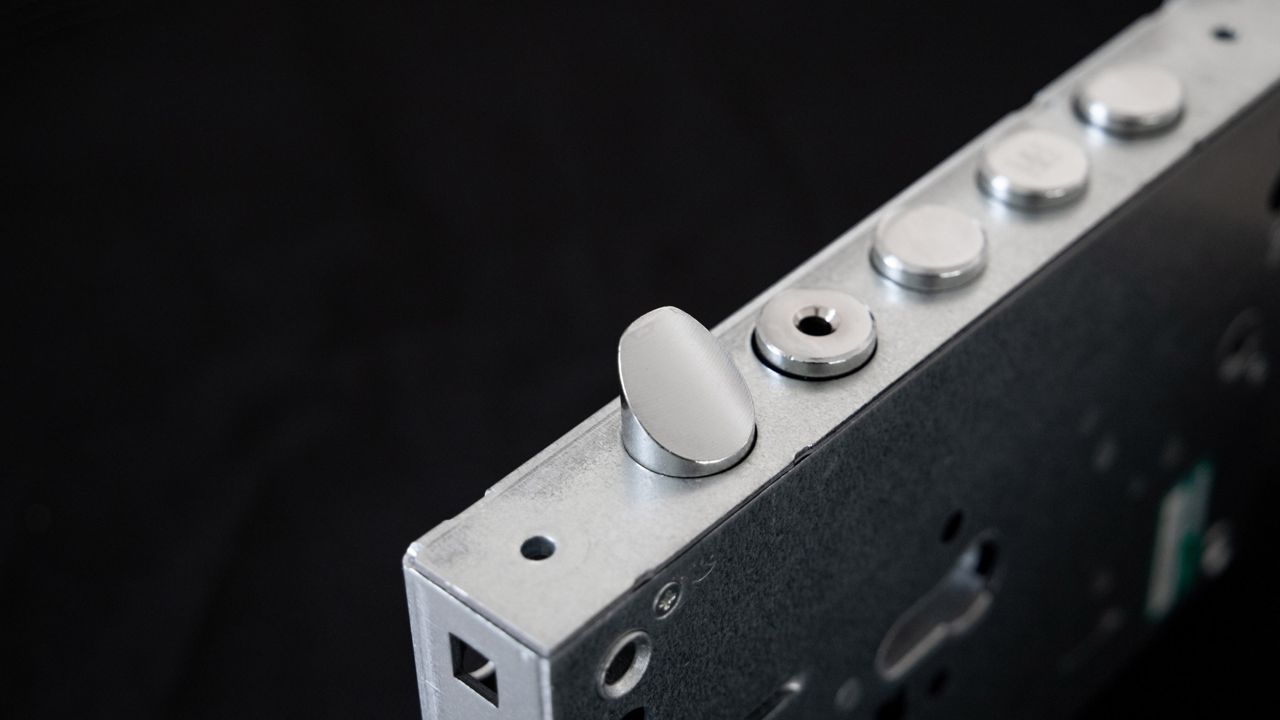
When it comes to locks for armoured doors, there are several factors to consider in order to navigate the wide range of options available on the market.
In addition to the difference between Europrofile cylinder locks and double-bitted locks (which we will discuss in future), another important feature to consider is whether the internal mechanism is lever-operated or gear-operated.
This difference is much less well known than others, but no less important.
Let's take a look at the differences between the two models and how to make the right choice for your home.
What are lever locks?
These locks are the first models for armoured doors to be marketed. They can be Europrofile cylinder locks (like our Series 85) or double-bitted locks (like the Series 52).
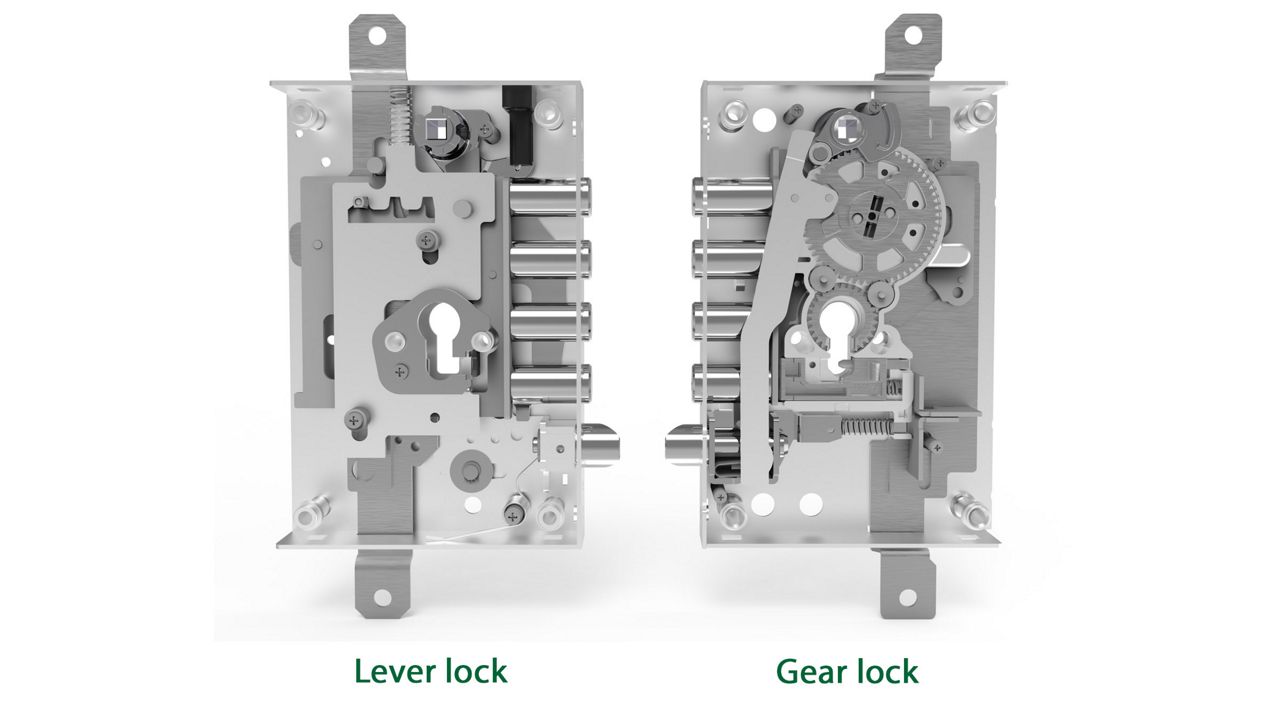
They use an internal mechanism consisting of a system of levers. When the key is inserted and turned in the cylinder (or in the gorges, in the case of a double-bitted key), the levers lift the security plate that locks the carriage where the bolts are located and, subsequently, the carriage itself.
This movement allows the bolts to slide forwards or backwards, enabling the door to be opened or closed.
In European cylinder locks, it is the cylinder cam that rotates to lift the levers, while in double-bit locks, it is the key itself that acts as a pivot.
What are gear locks?
More recently introduced to the market, these locks have an internal mechanism consisting of one or more gears that regulate the movement of the carriage with the bolts. These models are mainly Europrofile cylinder locks (such as our Series 82).
The gear mechanism makes the movement of the key much smoother and quieter, making it more comfortable for everyday use and better protecting the cylinder cam or key from wear and tear.
How to choose the right model for your needs?
Lever locks are still widely available on the market and offer excellent value for money, but they are less quiet during everyday use, producing the characteristic noise of the bolts when turning the key to open or close the door, and tend to cause greater wear and tear on the components.
Gear locks, on the other hand, are much quieter and are designed to operate effortlessly even on locks with multiple locking points, preserving the components for longer.